

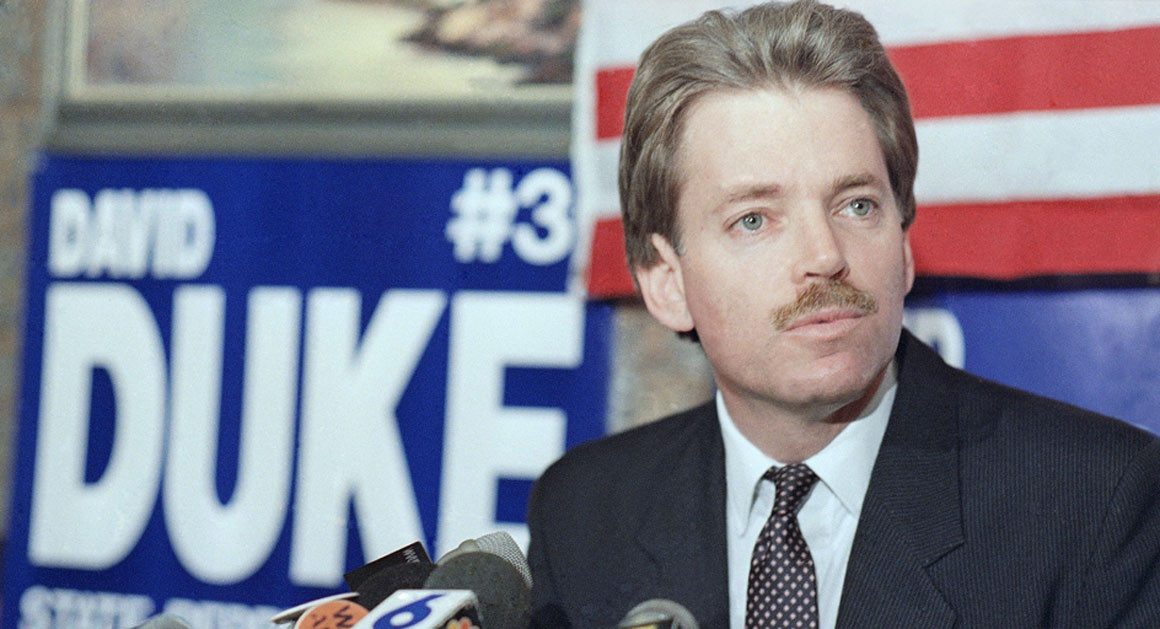
As a young girl growing up in Louisiana, I remember hearing the name David Duke and asking how someone like that — a former grand wizard of the Ku Klux Klan — could run for public office. I had learned in school that America stood for justice, fairness, and equality. Surely a man who once wore a hood and led a hate group couldn’t hold power. But there he was, almost elected governor. And people cheered him on.
That moment taught me something I never forgot: in this state, fear can win.
Now, I’m watching it win again — not through hoods or burning crosses, but through legislation.
Louisiana’s recent laws aren’t just “tough on crime.” They’re examples of fear written into policy. Surgical castration for sex offenders. Ten Commandments in classrooms. Abortion pill bans. The electric chair reinstated. Laws with no nuance, no mercy, and no room for complexity — even in cases of rape or incest.
These are not solutions. They are symbols. And symbols, when backed by law, become tools of control.
I say this not as a partisan, but as someone who has served in public office. And as a journalist, I’ve spent my adult life reporting on what power looks like when it works for some and punishes others. What’s happening in Louisiana today is not just about policy — it’s about who gets to decide what justice looks like, and for whom.
Growing up Latina in a state with a long history of white flight, redlining, and gerrymandered districts, I understood early that the system didn’t protect everyone equally. My family didn’t talk politics the way they talked about survival. We understood that justice wasn’t always neutral — and that it often depended on who was in power.
I remember the “Wrinkled Robe” scandal broke — a nine-year FBI investigation into judicial fraud and corruption in Jefferson Parish. Some judges were punished, but many lawyers and players involved found their way back into power. That was the moment I stopped believing in the clean version of justice I had been taught in school. What I saw instead was a system that could reset itself for the powerful, but never for the vulnerable.
Today’s laws follow that same logic. They hit hardest in communities like mine — communities that have long been over-policed, underfunded, and overlooked. They’re designed not to protect, but to intimidate. Not to prevent crime, but to make an example. The message is clear: step out of line, and you’ll be made into a spectacle.
And it’s working.
Supporters call it “order.” But let’s be honest: these laws are part of a strategy to hold onto power, especially in a state where demographics are shifting and the traditional political majority feels threatened. When fear becomes a governing tool, it’s not about safety — it’s about numbers. It’s about showing who’s in charge.
This is bigger than one administration or one set of laws. These tactics — fear-based policy, moral absolutism, public spectacle — are being watched by national figures who want to bring them elsewhere. If it works here, it won’t stop here.
And that should worry all of us.
Because if democracy is just a word, people like me — raised on the outside of it — know what it looks like when it disappears. We’ve seen fear masquerade as justice before in Louisiana. We’re seeing it again now.
And unless we name it for what it is, we’ll keep mistaking control for leadership — and fear for faith.
READ WHAT OTHERS ARE SAYING…